The bottled water industry is one of the most resilient and fastest-growing segments in the global beverage market. Whether you're an entrepreneur eyeing a new venture or an existing beverage producer looking to diversify, starting a bottled water business offers a compelling combination of steady demand, scalable production, and long-term profitability.
This guide walks you through every critical stage — from market research to production equipment — so you can launch your bottled water business with confidence.
Why the Bottled Water Business Is Worth Entering Right Now
Before diving into the "how," it helps to understand the "why." The global bottled water market was valued at approximately USD 378.29 billion in 2025 and is projected to reach USD 674.8 billion by 2033, growing at a CAGR of 7.5% (Straits Research). This is not a niche trend — it reflects a fundamental shift in how people consume water worldwide.
In the U.S. alone, bottled water consumption reached approximately 16.4 billion gallons in 2024, growing 2.9% over 2023, marking the ninth consecutive year as America's most popular packaged beverage by volume, according to the International Bottled Water Association (IBWA). Meanwhile, the Asia-Pacific region dominates globally with a market share of over 44.5% in 2025 (IMARC Group), driven by rapid urbanization, rising incomes, and growing awareness of clean drinking water.
What makes this market particularly attractive for new entrants is its segmentation. You don't have to compete head-on with multinationals like Nestlé or PepsiCo. Regional, functional, and premium water brands consistently carve out profitable niches that larger players overlook.
Step 1: Choose Your Bottled Water Business Model
The first decision is what type of bottled water you'll produce. This shapes everything downstream — your water source, treatment process, equipment, and target customer.
Purified / RO Water is the most common entry point. It uses municipal or groundwater treated through reverse osmosis. Margins are thinner but production is scalable and regulatory approval is more straightforward.
Mineral Water commands higher retail prices. It must come from a protected underground source with a naturally stable mineral composition — and regulations around labeling are strict in most markets.
Spring Water is similar in premium positioning to mineral water, requiring water that flows naturally to the surface. Source acquisition and protection are critical business assets.
Sparkling / Carbonated Water has seen explosive growth in urban markets. It requires additional carbonation equipment, but the premium pricing makes it attractive.
Functional Water — enhanced with electrolytes, vitamins, or alkaline pH — represents the fastest-growing niche. The global premium bottled water market reached approximately USD 40.87 billion in 2025 and is projected to grow at a CAGR of 7.36% through 2030 (Research and Markets), driven by consumer demand for healthier and luxury beverage options.
Insider tip: Many successful regional brands start with purified water, establish distribution networks and brand recognition, then layer on a premium line (e.g., mineral or alkaline) once they've built operational capacity. Don't try to do everything at launch.
Step 2: Build a Solid Business Plan
A business plan for a bottled water startup must address five financial realities that many entrepreneurs underestimate:
Startup Capital Requirements: A small-scale water bottling plant (producing around 2,000–6,000 bottles/hour) typically requires investment in water treatment systems, filling machinery, bottle blowing or procurement, labeling, and packaging equipment. Beyond equipment, budget for facility rental or construction, utility connections (water, electricity, compressed air), and regulatory compliance costs. To benchmark realistic numbers before you finalize your plan, see this detailed breakdown of
bottled water bottling line costs — covering everything from entry-level lines at around $45,000 to industrial setups exceeding $550,000.
Working Capital: Cash flow in beverage manufacturing is notoriously tight. You need to cover raw materials, labor, and logistics — often 30–60 days before revenue arrives from distributors.
Target Market Definition: Are you selling to retail supermarkets, food service/HoReCa (hotels, restaurants, cafes), office water delivery, or e-commerce? Each channel has different packaging requirements, pricing expectations, and margin structures.
Competitive Positioning: Study local competitors. In most markets, the battle is not won on product alone — it's won on distribution reliability and brand trust.
Break-Even Analysis: Factor in per-unit production cost (water, packaging, energy, labor) against your expected selling price per case. For most small-scale operations, break-even comes between 18–36 months depending on scale and market conditions.
Step 3: Navigate Regulations and Obtain Licenses
Regulatory compliance is non-negotiable and varies significantly by country. Missing a license can shut your operation down before it earns a single dollar.
In most markets, you will need:
Business registration and food manufacturing license from your national or state food safety authority (e.g., FDA in the U.S., FSSAI in India — where packaged water is now classified as a high-risk food requiring annual third-party audits, NAFDAC in Nigeria)
Water source permit — if drawing from a well or natural source
Product quality certification — your water must meet defined standards for microbial content, chemical composition, and physical properties
Labeling compliance — regulations govern what claims you can make (e.g., "mineral water" vs. "purified water") and what must appear on the label
Environmental permits for wastewater disposal
Work with a regulatory consultant in your target market early. Regulatory timelines can run 3–12 months and will affect your launch schedule.
Step 4: Secure Your Water Source and Treatment System
Your water is your product. The quality, consistency, and protection of your source is a critical business asset.
For purified water brands, source reliability matters more than source prestige — you're treating the water anyway. However, for mineral or spring water, the source is the brand story. Securing legal rights to a protected source, and testing it extensively before investment, is essential.
Regardless of source type, a professional water treatment system is mandatory. A standard setup typically includes:
Pre-filtration (sediment and activated carbon filters)
Reverse osmosis or UV purification
Ozone treatment for microbiological safety
Storage tanks with food-grade lining
The treatment system should be sized to match your filling line's hourly output — a bottleneck here will throttle your entire operation.
Step 5: Invest in the Right Production Equipment
This is where your operational decisions have the longest-lasting financial consequences. Production equipment is a capital-intensive, multi-year commitment, so choosing the right partner matters enormously.
A modern bottled water production line integrates several stages:
Bottle Blowing: PET preforms are blown into finished bottles on-site using a blow molding machine. This is more cost-efficient at scale than purchasing pre-made bottles.
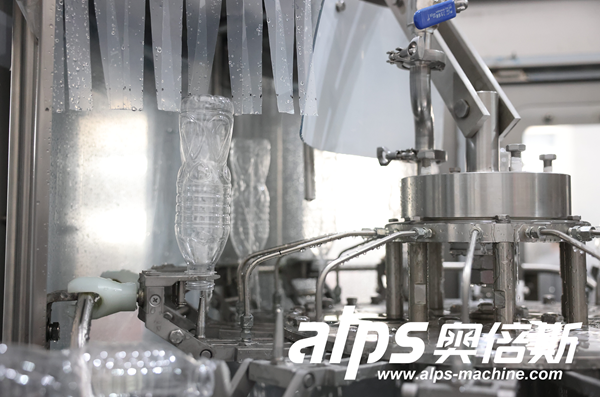
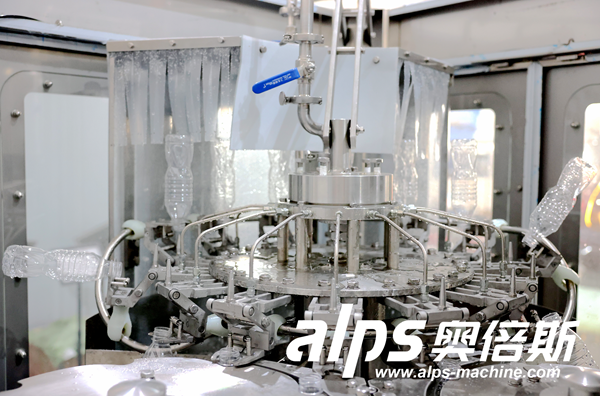
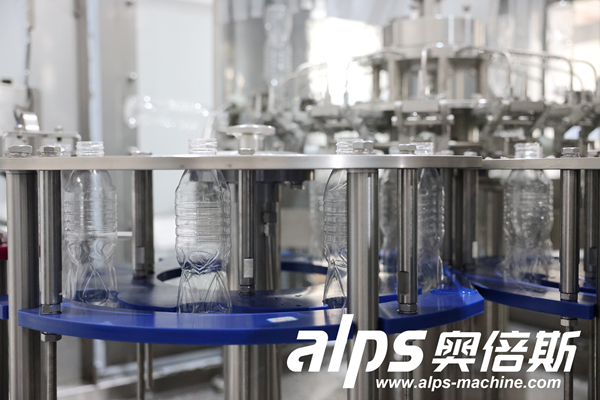
Washing, Filling, and Capping (3-in-1 Monoblock): The heart of the operation. A high-quality integrated system performs all three functions within a single, hygienic enclosure — reducing contamination risk and minimizing operator intervention. Look for machines that use food-grade stainless steel (SUS304 or SUS316) for all liquid-contact parts, gravity filling for consistent fill levels, and PLC-controlled automation for reliable, repeatable performance. If you're evaluating your options at this stage, this comprehensive
water filling machine guide covers every machine type — from linear to rotary, semi-automatic to fully automatic — along with key selection criteria and what to expect at each price tier.
Labeling and Coding: Shrink-sleeve or pressure-sensitive labeling combined with date/batch coding is required for retail distribution.
Packing and Palletizing: Automated packing lines reduce per-unit labor cost significantly at volumes above 6,000 bottles/hour.
When evaluating equipment suppliers, prioritize those who offer turnkey production line design — covering plant layout, utility planning, and full line integration — rather than just selling individual machines. This is particularly important if you're setting up your first plant, as integrating components from multiple vendors creates compatibility and service risks.
Production capacity planning is critical: Undersizing your line forces a costly upgrade within 2–3 years; oversizing ties up capital. A phased approach — starting at 4,000–6,000 BPH with the infrastructure to expand to 12,000–15,000 BPH — is typically the most financially sound strategy for new entrants.
Step 6: Build Your Brand and Packaging
In a commodity-adjacent market like purified water, packaging and brand identity do extraordinary heavy lifting. Consumers in a supermarket aisle make split-second decisions based on visual cues before they ever read a label.
Invest in professional design. Your bottle shape, label design, and color palette should communicate your brand's core value proposition — whether that's purity, sustainability, premium quality, or local origin.
Packaging format decisions also affect operations: single-serve 500ml bottles dominate convenience retail; 1.5L and 5-gallon formats serve home and office delivery; slim cans are emerging in premium hospitality. Each format requires different equipment configurations.
Sustainability is no longer optional. Increasing consumer and regulatory pressure around single-use plastics means your packaging strategy should include a clear roadmap — whether that's thinner PET, rPET (recycled plastic), or alternative materials like aluminum.
Step 7: Build Your Distribution Network
Production capacity means nothing without distribution. In the bottled water business, the company that controls distribution often wins — regardless of product quality.
Map your go-to-market approach clearly:
Modern retail (supermarkets, convenience stores): High volume, competitive pricing, and the logistical demands of retail compliance (barcodes, packaging specs, delivery windows). Expect 30–45% margins to go to the retailer.
Food service / HoReCa: Restaurants and hotels often pay premium prices for branded water. Private label (white label) opportunities in this channel can also generate consistent volume.
Direct-to-consumer / office delivery: 5-gallon and 19-liter format formats are ideal here. This channel offers better margins and customer stickiness but requires route logistics investment.
E-commerce: Growing rapidly in Asia and Western markets, but shipping costs for bottled water at scale make this channel challenging unless you're selling premium products at prices that absorb freight.
A practical approach for new entrants: focus on one primary channel in your launch market, dominate it, then expand. Trying to be present in all channels simultaneously dilutes your commercial team's effectiveness.
Starting a Bottled Water Business in India: What You Need to Know
India deserves special attention in any guide on this topic — and not just because search interest is concentrated here. The structural case for entering the Indian bottled water market is exceptionally strong, and the regulatory environment has recently undergone changes that create both opportunity and complexity for new operators.
The Market Opportunity
India's packaged drinking water market was valued at approximately USD 3.84 billion in 2024 and is projected to reach USD 8.73 billion by 2030, growing at a CAGR of 14.7% — nearly double the global average growth rate. This acceleration is driven by several converging forces: over 535 million urban residents dependent on safe water, persistent groundwater contamination (fluoride, nitrate, and arsenic exceeding permissible limits in multiple states), and a per capita bottled water consumption of just 5 liters per year against a global average of 24 liters — meaning enormous headroom for growth.
South India is currently the fastest-growing regional market, with a 12.5% CAGR, driven by deteriorating groundwater quality in Tamil Nadu and Kerala. North India holds the largest market share at around 35.5%. Tier II and Tier III cities represent the most underserved and fastest-penetrating opportunity for regional brands.
India's Regulatory Landscape: A Critical Update for 2025–2026
This is where many aspiring bottled water entrepreneurs in India are working with outdated information — and the confusion can be costly.
In October 2024, India's food safety regulator FSSAI formally ended the long-standing mandatory Bureau of Indian Standards (BIS) certification requirement for packaged drinking water. From January 1, 2026, the BIS mark is no longer compulsory. In its place, FSSAI has introduced a mandatory "Scheme of Testing" — and the compliance bar is, if anything, higher than before.
Under the new framework, every bottled water manufacturer in India must:
Hold a valid FSSAI Food Safety License (not just a registration — packaged drinking water is now classified as a "high-risk food," which requires an annual third-party audit)
Maintain detailed batch-level test records demonstrating conformity with IS 14543 parameters (for packaged drinking water) or IS 13428 (for natural mineral water)
Send water samples to NABL-accredited laboratories for testing
Comply with Schedule IV of the FSSAI Licensing and Registration Regulations, which governs hygiene and Good Manufacturing Practices (GMP) for the production facility
Ensure all packaging materials — PET bottles, pouches, glass, aluminum — conform to the Food Safety and Standards (Packaging) Regulations, 2018
Note for mineral water producers: Natural mineral water is not covered by the BIS exemption and continues to require separate certification under the Mineral Waters (Regulation) Rules.
The EPR Obligation: Don't Overlook It
One compliance requirement that catches many Indian bottled water startups off guard is Extended Producer Responsibility (EPR) under the Plastic Waste Management Rules. Any manufacturer using plastic bottles is required to register with the Central Pollution Control Board (CPCB) and meet annual plastic waste collection and recycling targets. Non-compliance carries financial penalties and can result in license suspension. Register for EPR before you start selling — not after.
Practical Advice for Indian Operators
The shift from BIS to FSSAI-led oversight is an opportunity for well-organized new entrants. Large, established operators are accustomed to the BIS system; the transition to FSSAI's testing-and-documentation regime rewards manufacturers who build strong laboratory relationships and QA processes from day one. If your compliance infrastructure is tighter than a legacy competitor's, inspections become a competitive advantage rather than a threat.
For most new Indian bottled water businesses, the realistic startup pathway is: obtain FSSAI license → establish NABL lab relationships → set up IS 14543-compliant water treatment → install filling line → build regional distribution starting in one state before expanding.
Common Mistakes New Bottled Water Businesses Make
Based on patterns seen across the industry, here are the failure modes to consciously avoid:
Underestimating the cost of compliance. Many first-time operators budget for equipment and facilities but fail to account for the time and cost of regulatory approvals, ongoing water testing, and audit readiness.
Choosing equipment based on price alone. A cheap filling line with poor after-sales support will cost more in downtime and lost production than the money saved upfront. Prioritize suppliers with regional service capability.
Neglecting the bottle supply chain. PET preforms and caps are raw materials with price volatility. Establish supplier relationships and buffer stock before launch.
Launching without a distribution partner in place. Production running and no shelf space is a cash-flow crisis waiting to happen. Sign distribution agreements before your equipment arrives.
Ignoring wastewater. Water treatment generates reject water (especially from RO systems). Plan your wastewater management and disposal from Day 1.
Conclusion: The Bottled Water Business Rewards Those Who Plan Well
Starting a bottled water business is neither quick nor cheap, but the market fundamentals remain as strong as any in the consumer goods space. The keys to success are choosing the right niche, building operational discipline into your production line, and going to market with a distribution strategy before you flip the first switch.
Whether you're planning a small regional operation or a large-scale plant, your equipment choices will define your cost structure and product quality for years. Work with experienced manufacturers who understand the full production process — from water treatment through to palletizing — and who can support your growth as your capacity needs evolve.
Looking to set up a bottled water production line? Alps Machine specializes in complete turnkey water bottling solutions — from water treatment systems and mineral water filling machines to blow molding, labeling, and packing lines. Contact our team to discuss the right configuration for your production scale and budget.