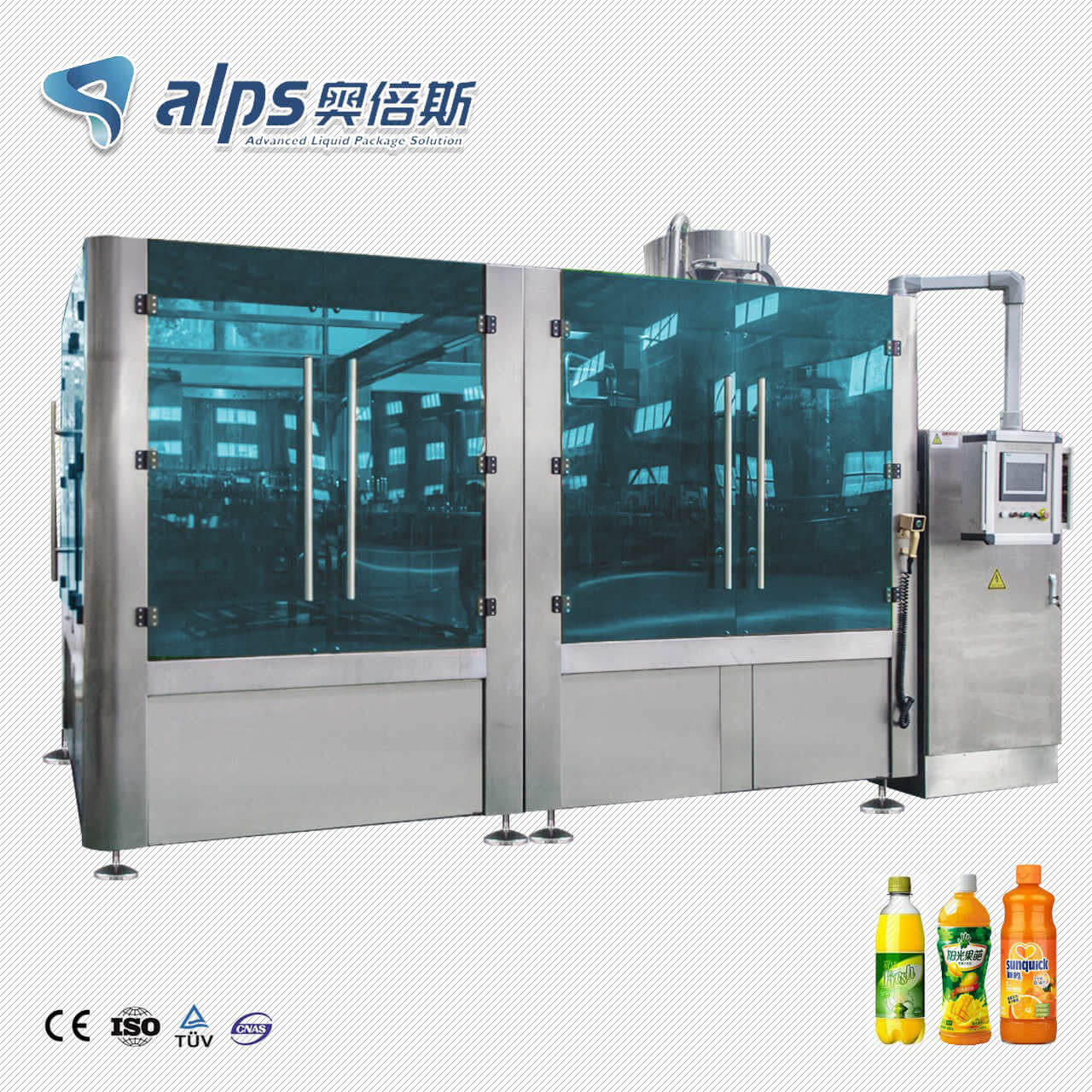
Advanced Liquid Package Solution
Any question?
Get in touch


Juices with pulp and beverages containing fruit pieces continue to rise in popularity as consumers demand more natural, nutritious, and “real-fruit” drink options. From orange juices with pulp to aloe vera drinks, tropical nectars, and fruit-infused teas, the beverage industry is facing increasing demand for products that contain visible fruit fibers or chunks.
However, these beverages are also among the most challenging to fill on an industrial production line. Traditional filling technology—designed for clear, low-viscosity liquids—often struggles with pulp clogging, inconsistent filling volumes, and damage to delicate fruit pieces.
This article explains how to properly fill juice with pulp or fruit pieces, the equipment solutions needed, and how to optimize your juice production line for high-viscosity beverages.
Filling beverages with pulp, fibers, or fruit chunks introduces several operational challenges:
Clogging of Valves and Pipes
Pulp can easily accumulate in narrow flow paths, causing valve blockages. Fruit pieces get stuck inside small-diameter nozzles or elbows in the pipelines, leading to frequent downtime.
Inconsistent Flow Rate
The irregular texture of pulp or fruit pieces disrupts smooth flow, causing fluctuations that lead to underfilling or overfilling—both costly problems for beverage producers.
Higher Viscosity
Thicker juices require stronger pumping power and wider pathways. Standard centrifugal pumps may fail or create shear forces that damage the fruit pieces.
Risk of Damaging Fruit Pieces
High-speed filling machines designed for thin liquids often crush or break delicate fruit chunks, reducing product quality.
Hygiene Challenges
Residue from pulp and fruit tends to stick to surfaces, increasing the risk of microbial contamination if the CIP system is not designed for high-viscosity beverages.
These challenges make it essential to choose the right filling equipment and juice production line layout.
Many beverage categories require pulp-friendly equipment:
Orange juice with pulp
Mango or pineapple nectar with fibers
Fruit drinks with visible pieces (e.g., peach, pear, guava)
Aloe vera drinks
Coconut jelly beverages
Yogurt or probiotic drinks containing fibers or cereal
Tea beverages with fruit particles
Smoothies or vegetable blends
Each product type has a different viscosity level, pulp concentration, and fruit size. The equipment must be chosen according to these parameters.
Modern beverage factories rely on specialized juice filling systems to handle pulp-containing products.
Large-diameter filling valves are one of the simplest yet most effective solutions for pulp beverages.
Benefits:
Prevent clogging from large fruit particles
Allow smooth passage of pulp without irregular flow
Reduce downtime and maintenance
Improve accuracy for high pulp concentration juice
Many manufacturers use 8–15 mm diameter nozzles depending on fruit size. This ensures smooth, continuous flow from tank to bottle.
Piston fillers are widely used for viscous products and beverages containing structured fruit pieces.
Advantages:
Volumetric accuracy regardless of viscosity
Gentle handling of pulp
Ability to dispense uniform fruit distribution
Ideal for thick nectars, smoothies, and fruit-inclusion drinks
Because piston fillers create a precise suction and discharge stroke, they can handle chunky products without damaging their texture.
For medium-viscosity juices, gravity-based filling combined with a pump-assist system is highly effective.
How it works:
Product tank is elevated for natural gravity feed
Pump provides additional pressure to stabilize flow
Reduces turbulence and prevents pulp accumulation
This method works best for products with moderate pulp levels rather than large fruit pieces.
Servo filling machines adapt to real-time viscosity changes and offer high dosing accuracy.
Key benefits:
Precise control of fill volume and speed
Real-time adjustments based on pulp content
Improved distribution of fruit pieces in each bottle
Servo systems are especially useful for premium beverages where consistency is critical.
Hot filling is popular for pulp-rich beverages due to its ability to maintain product safety without preservatives.
A pulp-specific hot-fill machine includes:
A heated storage tank
Agitation system to keep pulp evenly suspended
Large filling valves
Temperature-controlled filling nozzles
Hot filling preserves fruit texture when properly controlled.
Mass flow meters offer exceptional accuracy even when handling pulp.
Advantages:
No effect from pulp density variations
Fast filling speed
Ideal for high-value fruit beverages
Although more expensive, they offer the highest precision in pulp-filled products.
Filling pulp juice requires more than just the filler itself—several auxiliary systems ensure consistent quality.
Pulp naturally settles at the bottom of a tank. Agitation is essential.
Functions:
Keeps pulp evenly suspended
Prevents sediment blockage in pipes
Ensures consistent pulp distribution in each bottle
Mixers are usually low-shear to prevent damage to fruit pieces.
Standard centrifugal pumps are unsuitable for pulp, as they shear and crush fruit.
Recommended pump types:
Lobe pumps
Rotary pumps
Peristaltic pumps (for fragile pieces)
These pumps gently move pulp and fruit pieces without damage.
The entire filling system—from tank to nozzle—must be designed for pulp.
Wide-diameter pipes
Smooth interior surfaces
No sharp bends or elbows
Minimal dead spots
These features prevent buildup and ensure consistent flow.
Bottle design also plays a role.
A wider bottle neck allows easier filling of fruit chunks
Hot-fill bottles must be heat resistant
Cap type (screw cap, sports cap) matters for sealing high-viscosity beverages
Proper packaging ensures smooth downstream operation.
A typical line for pulp beverages includes:
Raw material receiving
Pulp mixing / blending tank
Agitation tank with recirculation system
Transfer pump (lobe/rotary pump)
Heated filling tank (if hot filling)
Pulp-capable filling machine
Capper
Pasteurizer or cooling tunnel
Labeling and packing
A well-designed line ensures steady flow and consistent product quality.
Separation is a major problem with pulp or fruit beverages.
Key prevention techniques:
Constant tank agitation: Keeps fruit in suspension
Recirculation loops: Avoid stagnant product in pipes
Proper temperature control: Warm liquids settle slower
Uniform flow rate: Avoid slow pumping that encourages settling
These measures help maintain balanced pulp content in every bottle.
Fixes:
Use wide nozzles
Shorten pipeline distance
Clean the valve regularly
Fixes:
Install agitation tanks
Use servo-controlled dosing
Apply dual-flow filling (liquid and pulp separately then combine)
Fixes:
Use gentle pumps
Reduce filling speed
Avoid sharp pipeline angles
Fixes:
Optimize temperature
Use anti-foam nozzles
Implement laminar-flow filling
Fixes:
Use 316L stainless steel in all contact areas
Upgrade CIP system for pulp removal
Choose correct gasket materials
Proper equipment design is the best long-term solution.
The ideal filling machine depends on several factors:
Viscosity level: Thin juice with light pulp vs. thick nectar
Fruit size: Small fibers vs. large pieces
Production capacity: Manual, semi-automatic, or fully automatic
Hot fill or cold fill
Type of packaging: PET bottle, glass bottle, can, pouch
Budget and automation needs
Manufacturers should evaluate both current needs and future expansion plans.
Filling juice with pulp or fruit pieces is more complex than filling standard beverages. It requires specialized equipment such as large-diameter valves, servo-controlled systems, piston fillers, lobe pumps, and pulp agitators. By designing the right line layout, choosing proper supporting equipment, and implementing good maintenance practices, beverage producers can achieve consistent quality and efficient production.
As demand for natural, pulp-rich beverages continues to grow, investing in the correct filling technology becomes essential for competitive advantage. Many manufacturers rely on professional, customized solutions to build a reliable production line for high-viscosity beverages.
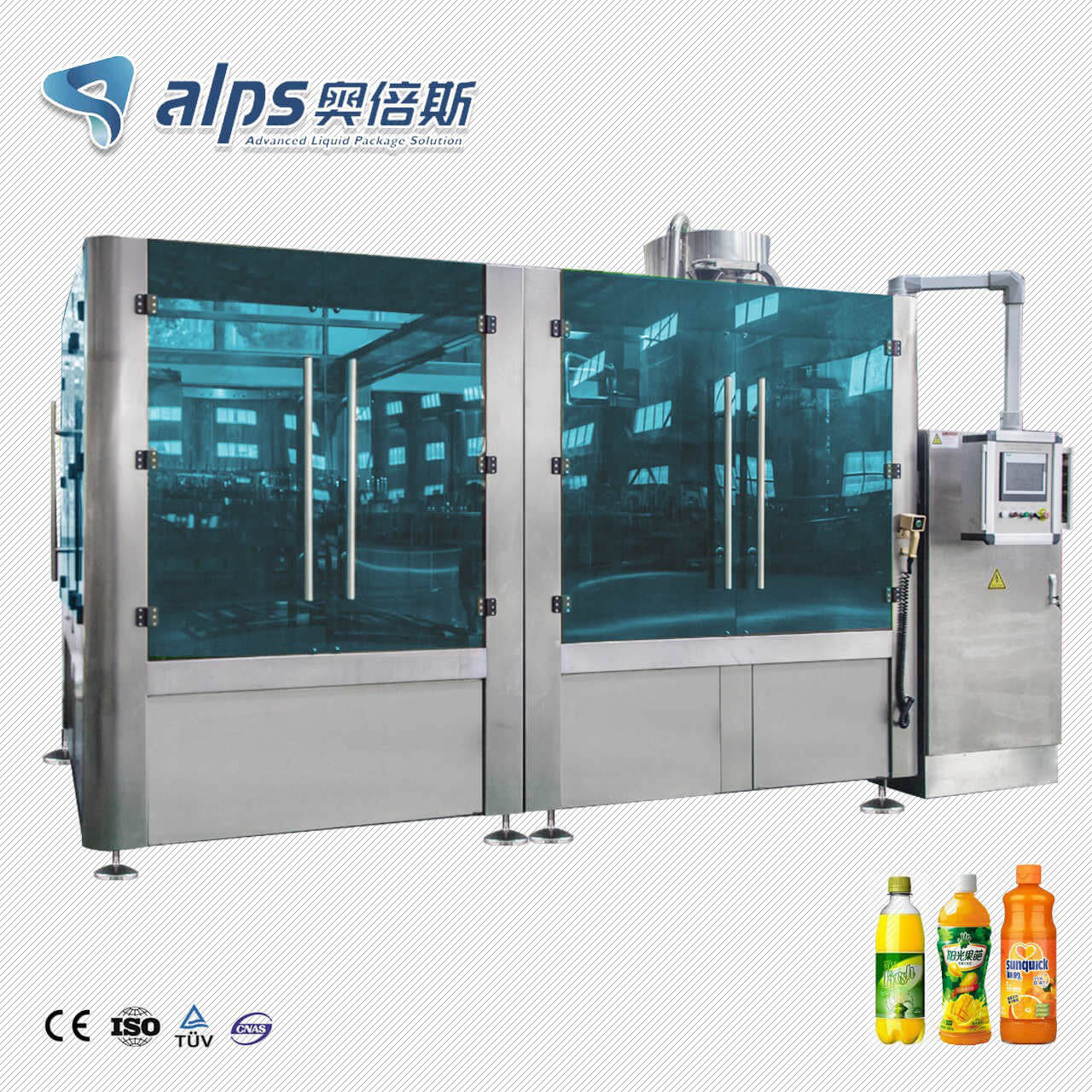
For advanced technical support and efficient pulp-juice filling solutions, beverage companies worldwide trust ALPS machine.


By continuing to use the site you agree to our privacy policy Terms and Conditions.